


Virtual reality recreates Long March history at Luding Bridge
A virtual reality experience near Luding Bridge in China is recreating one of the most famous episodes of the Red Army’s Long March. The project allows visitors to experience a virtual version of the 1935 capture of the bridge while standing close to the original site.
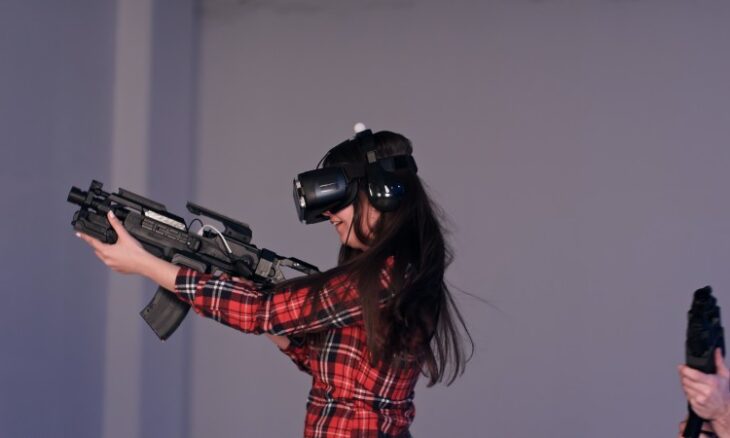
Visitors enter the experience wearing a virtual reality headset and carrying a replica rifle. They take part in a recreation of the crossing, moving across iron chains while simulated enemy fire forms part of the experience. The virtual setting is designed to place visitors in the position of Red Army soldiers taking part in the historic episode.
The real Luding Bridge is 103.67 metres long and 3 metres wide. It is suspended from 13 iron chains, with nine lower chains supporting wooden planks that form the walkway. Four additional chains are positioned along the sides and serve as handrails.
The virtual experience recreates the bridge crossing within a smaller physical area. Its technology uses sub-millimetre precision spatial positioning to track movement during the experience. A system described as a “parallel universe” setup also allows a 100-metre virtual bridge route to be fitted into a more limited physical space.
This arrangement is designed to make visitors feel as though they are moving across the iron-chain bridge itself. Rather than requiring a physical structure matching the length of the original site, the system uses virtual reality and spatial tracking to represent the crossing within the available area.
The project was developed by a 280-person production team over seven months. The work involved creating the virtual reconstruction and the systems needed to allow visitors to move through the experience while wearing the headset and carrying the replica rifle.
The attraction opened in June 2025. Since its opening, its operator has reported that 45,000 visitors have taken part in the virtual reality experience.
The experience combines the historical setting with a virtual representation of the event. Visitors follow the recreated route through a controlled physical space while the positioning system tracks their movements with high precision.
The 100-metre virtual route is designed to give participants the experience of crossing the bridge despite the smaller size of the physical area used for the attraction. The technology therefore provides a way to reproduce the bridge journey without creating a full-sized physical replica.